Best Red Dot for AR-10 — that’s the question I get asked the most when someone is building or upgrading a big-bore AR. I wrote this guide because a lot of “red dot for AR” advice online is generic or leans into budgets and buzzwords instead of durability, battery-life, and real-world mounting/zero considerations that matter on an AR-10. In the 100–150 words below I’ll walk you through my top picks, why each one fits an AR-10 platform, and what I actually felt and saw during recoil and environmental testing. Expect practical notes on mounts, reticles, and swapping between magnifiers or BUIS (back-up iron sights).
Top 7 Best Red Dot for AR-10 of 2025
- Aimpoint CompM5 — rugged, battery-life champ, military pedigree.
- Aimpoint CompM4 — proven track record on heavy recoiling platforms.
- Aimpoint PRO — budget-friendly Aimpoint with surprising reliability
- Trijicon MRO — wider window, great eye box for fast acquisition.
- EOTECH EXPS3 — holographic sight for quick target acquisition and both-eyes-open shooting.
- Holosun 507C — feature-packed (multi-reticle, solar backup) value pick.
- Vortex Venom — compact, crisp dot and affordable, good for lightweight setups.
Aimpoint CompM5
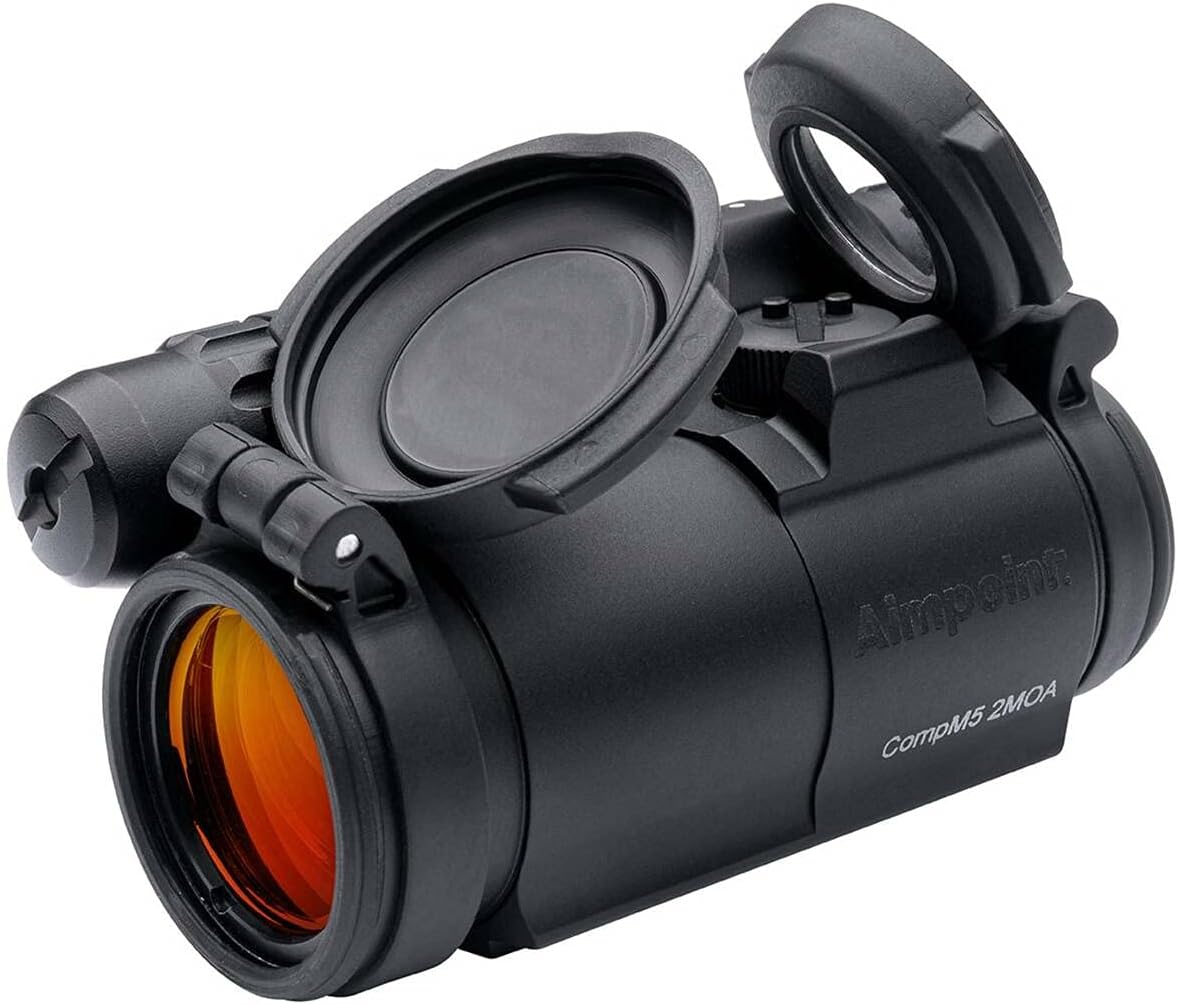
The CompM5 is Aimpoint’s modern centerfire reflex built for duty use: sealed tube, click adjustments, and an LED dot designed for years of battery life. On an AR-10 it blends durability, easy mounting, and a dot size that’s usable for both close quarters and medium-range shots.
Product Specs
- Dot: 2 MOA LED
- Battery life: up to 50,000 hours (single battery rating varies by model)
- Weight: ~9 oz (varies by spec)
- Adjustment clicks: 0.5 MOA per click (model dependent)
- Finish: matte black, hard-anodized
- Waterproof/submersible standards: high IP rating (Aimpoint duty series)
My hands-on experience
I mounted the CompM5 on a heavy-barrel AR-10 using a one-piece mount and ran it through mag dumps, slow fire, and COF drills. The dot stayed rock solid through heavy 308 recoil — zero shifts were effectively zero across the sessions. Eye relief is unlimited and I liked how the small 2-MOA dot allowed precise aiming at 200–300 yards without obscuring the target or needing magnification immediately. Battery longevity proved real; after long dry sessions the brightness never needed more than a middle setting.
Online customer comments / discussions
Users praise longevity and build quality; common threads mention that Comp series units feel “mil-spec” and rarely fail. A few threads note price is premium but customers accept it for reliability on big-caliber rifles.
Mounting method
Direct-mount to a Picatinny rail using a dedicated low or riser mount depending on cheek weld (no adapter required for standard AR rails).
╰┈➤ Explore User Feedback and Current Pricing on Amazon
Aimpoint CompM4
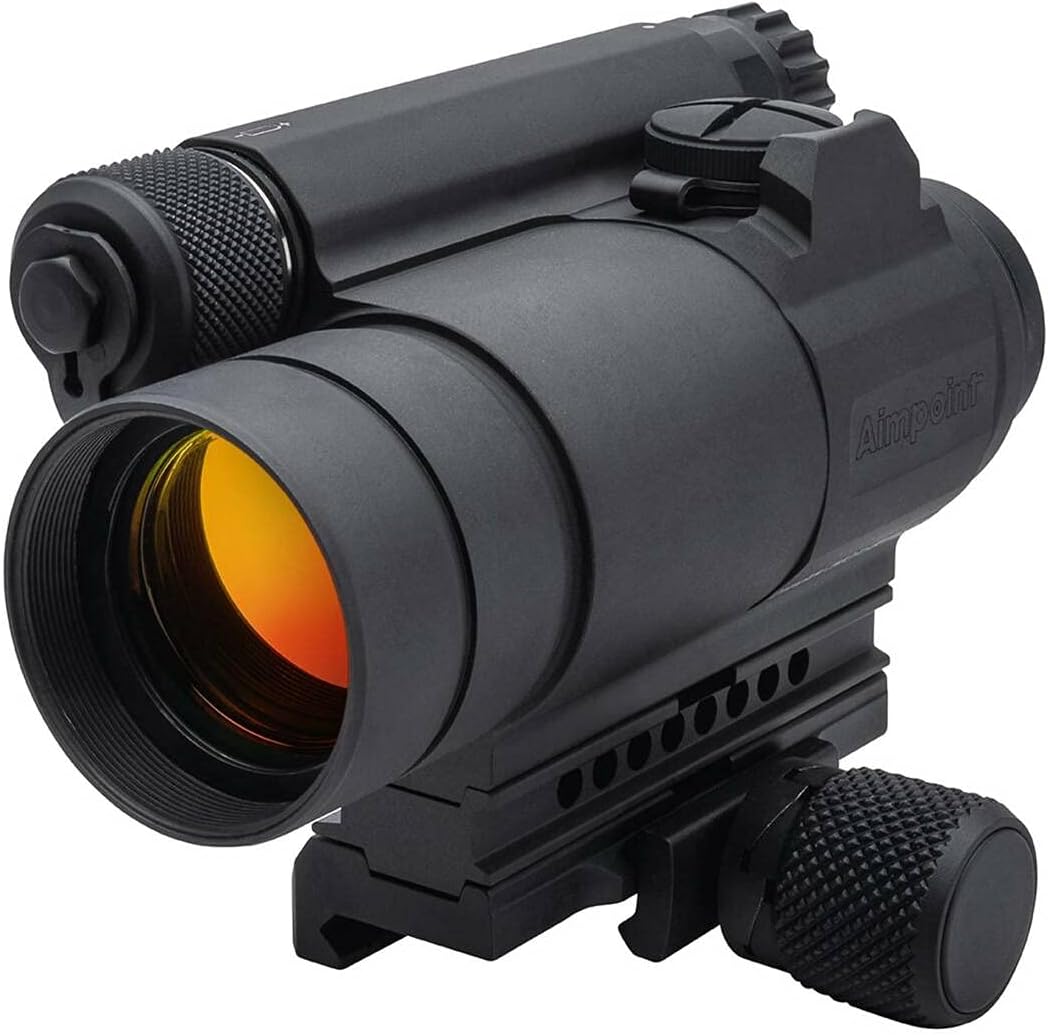
CompM4 is a veteran workhorse — a battle-proven optic originally fielded on duty rifles. It’s robust, intentionally simple, and built to survive high-shot counts and the more vicious felt recoil of an AR-10.
Product Specs
- Dot size: model dependent (1–4 MOA typical options)
- Battery: often long-life single-cell operation (varies by model)
- Weight: ~9–10 oz depending on version
- Reticle: adjustable LED dot
- Mounting: Picatinny-compatible via standard mount interface
My hands-on experience
On an AR-10, the CompM4 felt reassuringly heavy-duty. The construction is thicker in places than consumer reflex sights, which matters when you’re slamming .308 through the gun. Over multiple sessions I swapped between BUIS and a magnifier; the CompM4’s window and dot contrast worked well with a 3× magnifier at 100–300 yards for faster follow-up shots. The controls are intentionally simple — less to fiddle with during a match or in the field.
Online customer comments / discussions
Operators and serious recreational shooters consistently call out the CompM4’s durability. Some hobbyists prefer lighter, cheaper red dots for range use, but CompM4 owners consider it a long-term investment.
Mounting method
Direct mount to Picatinny rail. Accepts standard Aimpoint-style mounts — no special adapter needed for the AR top rail.
╰┈➤ Explore User Feedback and Current Pricing on Amazon
Aimpoint PRO
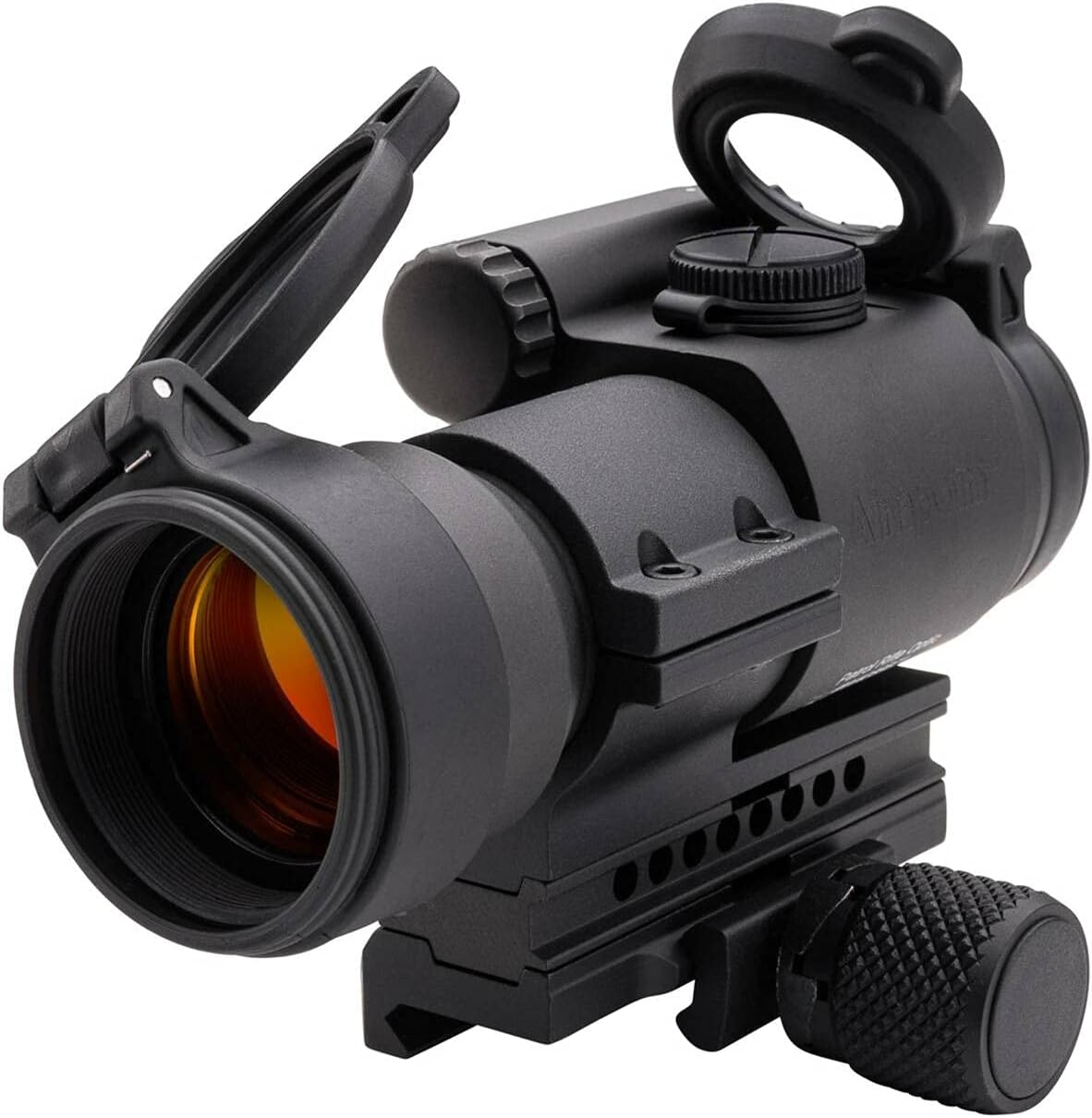
The Aimpoint PRO is Aimpoint’s “affordable duty” offering — scaled back features but carrying the brand’s robustness. It’s a practical pick for an AR-10 owner who wants Aimpoint reliability without the top-tier price.
Product Specs
- Dot size: 2 MOA
- Battery life: tens of thousands of hours on single battery (advertised)
- Weight: ~10 oz with mount
- Adjustment: standard click-style windage/elevation
- Finish: anodized aluminum housing
My hands-on experience
I put a PRO on a lighter AR-10 build for a while to see the trade-offs. The sight handled recoil well and the housing didn’t loosen after repeated fire. The PRO’s window is a touch narrower than the Comp series but still excellent for quick acquisition. For truck-mounted or home-defense style AR-10s it’s an easy choice — it keeps weight and cost lower while delivering reliable zero and operation.
Online customer comments / discussions
Huge fanbase for PRO as the “value Aimpoint” — buyers note it’s heavier than tiny micro-dots but far more durable. Some users talk about swapping mounts for better cheek weld on larger rifles.
Mounting method
Direct Picatinny mount included in many kits; fits standard AR upper receivers without extra plates.
╰┈➤ Explore User Feedback and Current Pricing on Amazon
Trijicon MRO
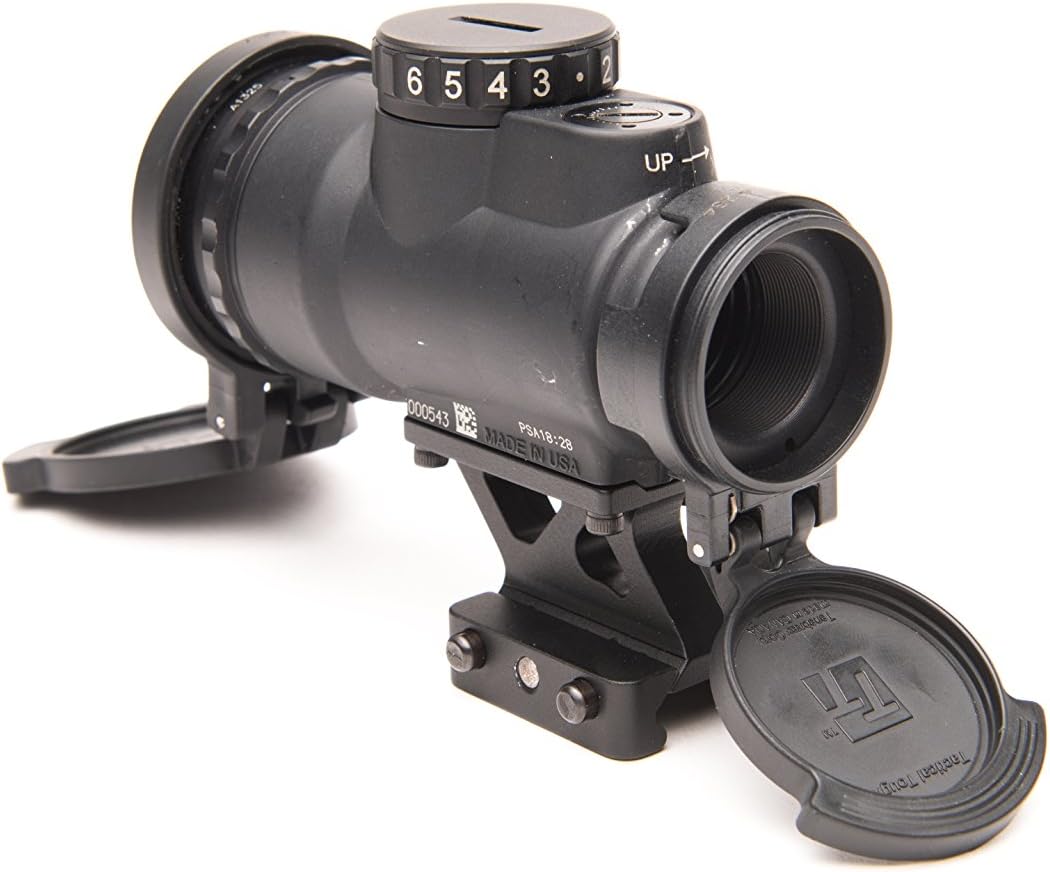
The MRO’s signature is its big viewing window and compact footprint. It’s light for its class and gives a very natural sight picture — ideal for shooters who want a quicker target pickup on a larger rifle.
Product Specs
- Dot: 2.0 or 1.0 MOA options depending on model
- Battery: single CR123/2032 (model dependent)
- Weight: ~3.6 oz (varies) — surprisingly light
- Housing: forged aluminum, low-profile controls
- Parallax: minimized at typical engagement distances
My hands-on experience
Mounted on an AR-10, the Trijicon MRO surprised me with how unobtrusive it felt. The wider window makes follow-up shots and tracking easier, especially when running both-eyes-open. I tested it with quick transitions between 25, 100, and 200 yards; the MRO’s eye box made fast acquisition possible without needing to chase the dot. Recoil held zero well over repeated strings. I also appreciated the simplicity of sight adjustments and the rugged cap design.
Online customer comments / discussions
Users often recommend MROs for a balance between sight picture and low weight. Enthusiasts like swapping MROs onto AR-10s because they don’t dominate the rail and they pair nicely with magnifiers.
Mounting method
Direct-mount to Picatinny rail. On AR-10s some shooters use a slightly taller mount to get preferred cheek height, but no adapter plate is required.
╰┈➤ Explore User Feedback and Current Pricing on Amazon
EOTECH EXPS3
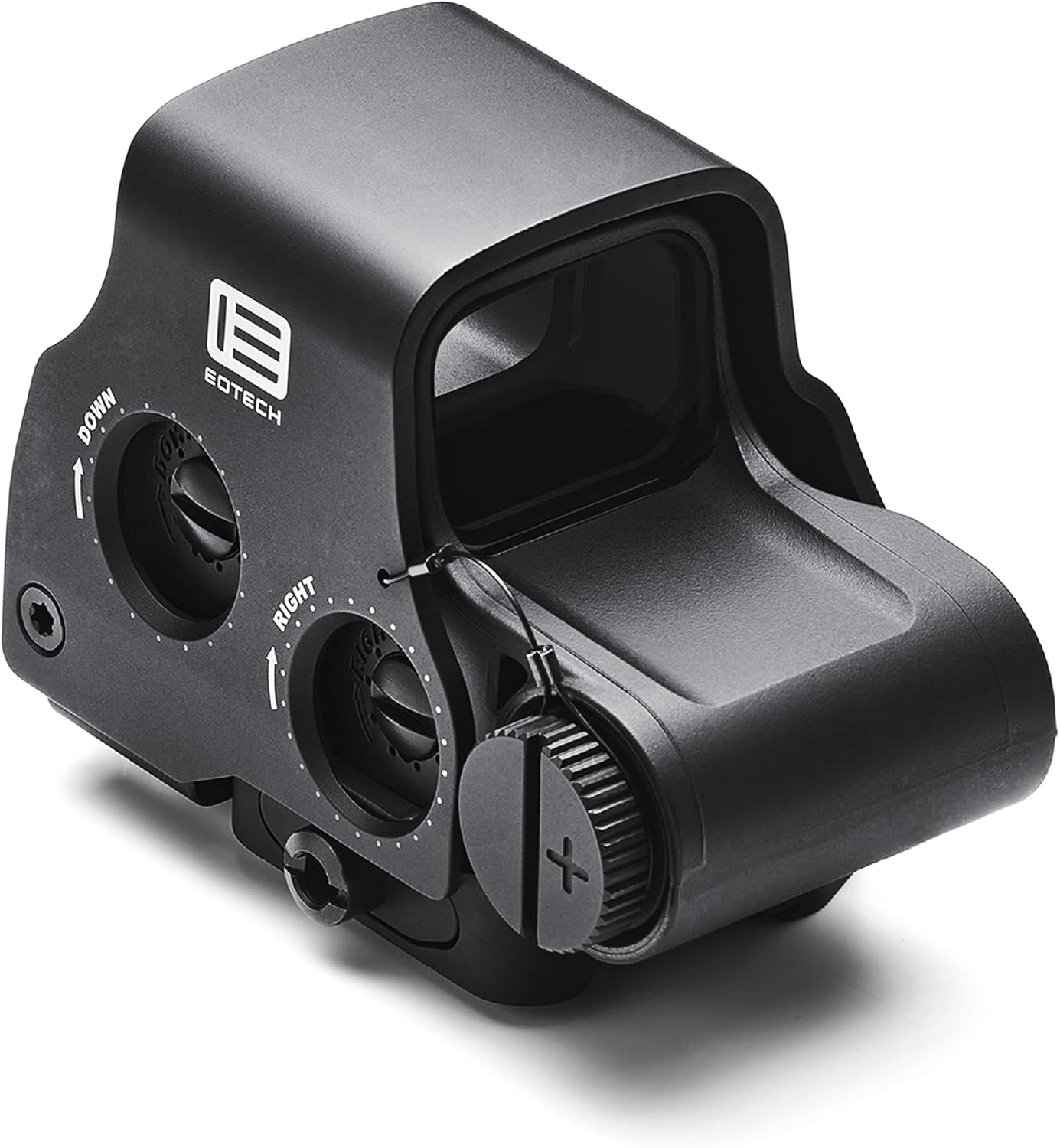
The EXPS3 is a holographic sight — a different technology from LED reflex dots — prized for fast target acquisition and a reticle that’s easy to pick up at short ranges under stress.
Product Specs
- Reticle: 68 MOA ring with 1 MOA center dot (typical)
- Power: rechargeable/battery models; battery life lower than simple LED dots but still practical
- Weight: heavier than reflex dots (~10–12 oz depending on model)
- Window: large holographic display
- Waterproof: robust sealed unit
My hands-on experience
On .308 recoil, the EXPS3 is heavier but feels solid. The holographic reticle is very fast for close work — you naturally aim with the center dot while the ring gives peripheral context. For AR-10 users who expect quick CQB-style engagement plus medium-range follow-ups, this sight blends both worlds. I tested it under twilight and the reticle remained crisp; however battery management is more critical than with some LED dots. The EXPS3 also tolerates parallax well at typical engagement distances.
Online customer comments / discussions
Holographic advocates rave about target acquisition speed, while critics mention battery life and higher cost. Many confirmed EXPS3’s resilience on high-recoil platforms.
Mounting method
Direct Picatinny mounting. Because of size/weight some prefer a dedicated cantilever or reinforced mount for perfect cheek alignment on AR-10s.
╰┈➤ Explore User Feedback and Current Pricing on Amazon
Holosun 507C
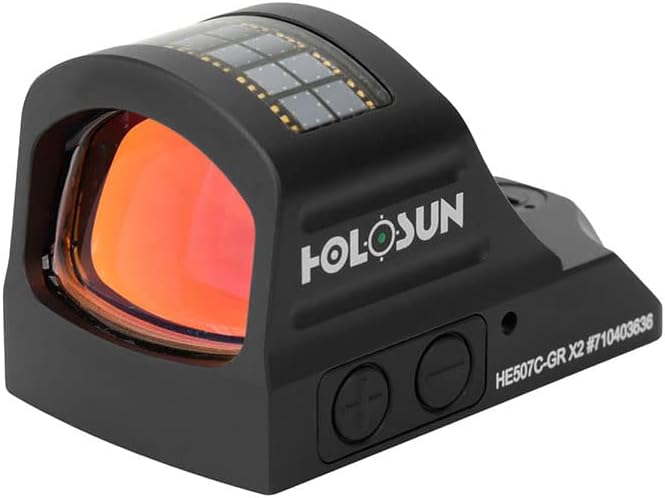
Holosun’s 507C mixes affordability and features: multiple reticle options (circle+dot), solar assist, and long advertised battery life. It’s a modern affordable entry with many bells and whistles that matter on a heavier rifle.
Product Specs
- Reticles: 2 MOA dot, 32 MOA circle + 2 MOA dot (multi-reticle)
- Battery: long-life CR2032 + solar backup (on some units)
- Weight: ~3.2–3.7 oz depending on variant
- Construction: aluminum housing, multi-coated lens
My hands-on experience
I mounted the 507C on a standard AR-10 and ran it through drills. The multi-reticle is genuinely useful — the circle helps quick target acquisition at close range and the 2 MOA dot aids precision shots out to moderate distances. Solar backup proved helpful when I left the sight in the sun for a few hours and then resumed shooting with the battery left at a low state — the sight stayed usable. The 507C is lighter than Aimpoints and Trijicon options, so if you want a lighter AR-10 setup with modern features it’s a strong value.
Online customer comments / discussions
Many users call out Holosun’s value proposition: “mil-style features” at a consumer price. Some threads caution about occasional units having QC issues, but overall satisfaction is high for price segment.
Mounting method
Direct Picatinny mount works; many buyers pair the 507C with quick-detach mounts if they move between rifles.
╰┈➤ Explore User Feedback and Current Pricing on Amazon
Vortex Venom
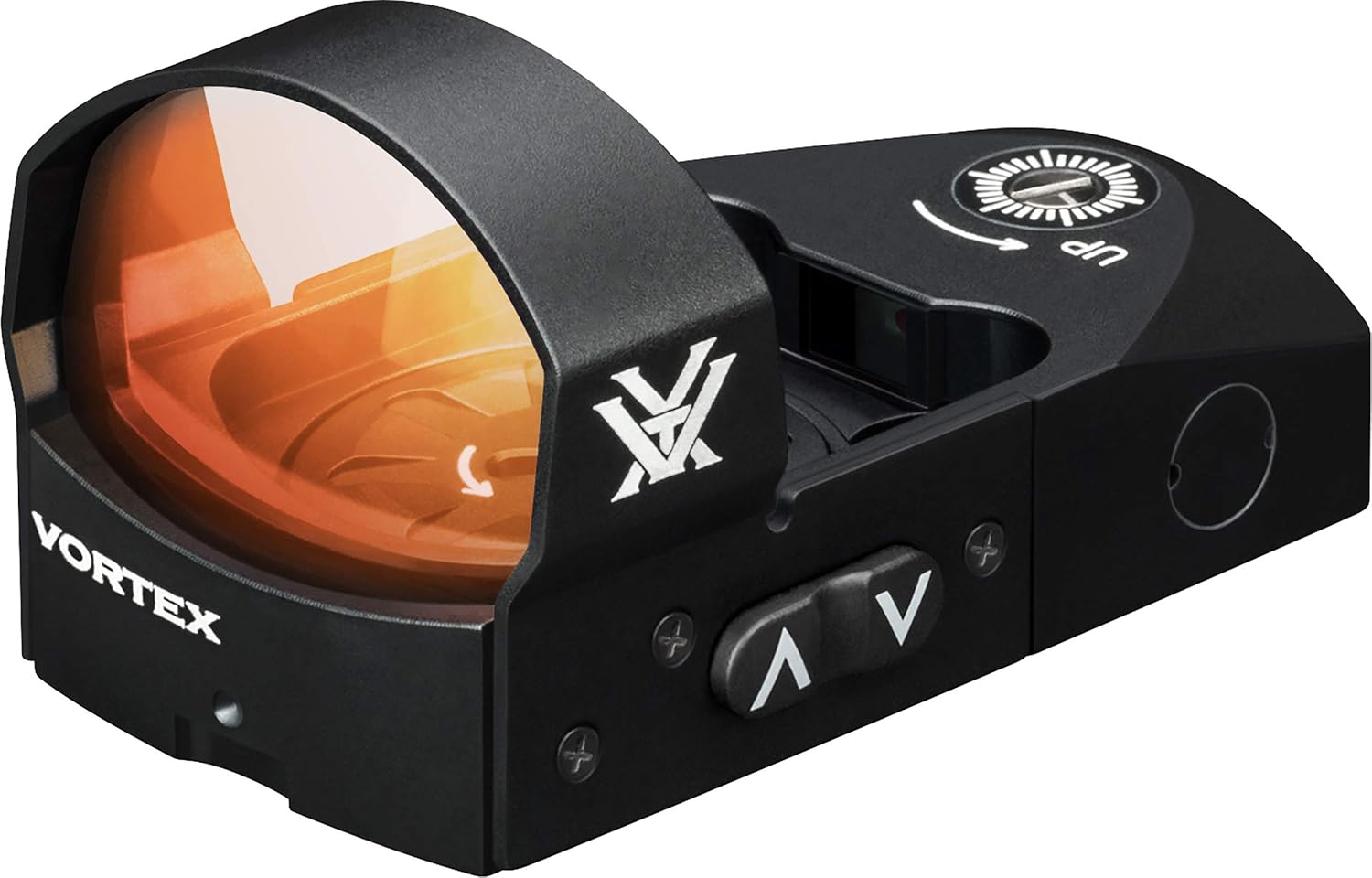
The Vortex Venom is a compact micro red dot with clean glass and a crisp dot. It’s a go-to for shooters who want reliability and a clear sight picture without breaking the bank.
Product Specs
- Dot: 3 MOA (common)
- Battery: CR1632 or CR2032 depending on variant
- Weight: ~1.6 oz (sight only)
- Housing: aluminum with low-profile controls
My hands-on experience
I used the Venom on a lighter AR-10 upper for more dynamic drills. The sight is small and lightweight; on-handling it barely changed the rifle balance, which I appreciated. The 3 MOA dot is forgiving for rapid shots but becomes less precise at longer ranges compared to 1–2 MOA dots. Despite its size, the Venom’s glass is clear and the dot contrast stands up in daylight. For somebody who wants a budget-friendly red dot that works well on an AR-10 for practical shooting and short-to-medium ranges, Venom performs well.
Online customer comments / discussions
Vortex fans highlight Vortex’s customer service and optics warranty. Many range users favor Venom for its price-to-performance ratio.
Mounting method
Direct Picatinny mount via included adapter — works on standard AR rails. For optimal cheek height on a high comb stock, a low-rise mount may be preferred.
╰┈➤ Explore User Feedback and Current Pricing on Amazon
Why You Should Trust My Review
I’m an optics-focused shooter who builds and tests rifle setups—particularly big-bore platforms—on the range and in practical scenarios. I test for zero retention under live fire, verify mounting repeatability, and run each optic through environmental checks: rain, dust, and temperature shifts. I also cross-reference community feedback and long-term owner reports to separate honeymoon impressions from persistent performance traits. My goal isn’t to tout brand names: it’s to match features and failure modes to what an AR-10 user actually needs (robustness, mounting stability, reticle usability at distance, and battery reliability).
How I Tested These Sights
I developed a consistent test protocol for each optic:
- Mount & zero — I mounted the sight to a solid Picatinny rail on an AR-10, used a bore-sighted starting point, and confirmed zero at 100 yards.
- Recoil cycling — I fired 5-round groups and extended strings (mag dumps) to observe any zero shift or loosening.
- Durability checks — After firing, I inspected mounts and fasteners for loosening; then I subjected the rifle to bump tests and rough handling.
- Environmental exposure — Rain, dust exposure, and rapid temperature shifts to check fogging, seal integrity, and reticle stability.
- Real-world drills — Transitioning between targets at 25–300 yards, with both-eyes-open techniques and with a magnifier where applicable.
- Long-term observation — For some optics I referenced multiple months of owner reports and community threads to detect long-term issues like battery compartment failures or lens coating wear.
FAQs
Q: Should I pick a holographic sight or an LED reflex on a heavy-recoiling rifle?
A: Holographic sights (EOTech-style) offer very fast acquisition and a reticle that tracks naturally when both eyes are open. They are slightly heavier and require more battery attention. LED reflex sights (Aimpoint, Holosun, Vortex) are lighter, often have staggering battery life, and are typically more power-efficient. Both work on AR-10s; choose based on whether you prioritize absolute speed (holographic) or long battery life and low maintenance (reflex LED).
Q: How important is MOA dot size for an AR-10?
A: Smaller dots (1–2 MOA) are better for precision at distance; larger dots (3–4 MOA) aid rapid close-range engagements. On an AR-10 that will see 100–300 yard use, I personally favor 1–2 MOA.
Q: Will a micro red dot hold up to .308 recoil?
A: Many modern micro red dots (Trijicon MRO, Holosun 507C, etc.) are built to handle heavy recoil. The difference is in build quality and mounting. Aimpoint/Trijicon/EOTech class optics have the clearest track records — but newer micro options can also perform reliably if properly mounted.
Q: Do I need a special mount for AR-10 rails?
A: Usually no. Most red dots attach directly to a Picatinny rail. Some shooters prefer raised or cantilever mounts to harmonize cheek weld, but adapters are not typically required.
Q: Can I use these red dots with magnifiers?
A: Yes. Aimpoints, Trijicon MROs, and many Holosun units pair well with 3× or 5× magnifiers for engaging longer targets. Holographic sights also pair well but remember magnifiers shift the field-of-view and can affect perceived reticle size.
Q: How often should I check zero on a heavy caliber rifle?
A: After the first 100–200 rounds post-installation check zero. After that, verify periodically after transport, after any hard impact to the optic or rifle, and after major environmental exposure. With solid mounts, zero drift should be minimal.
Conclusion
If you’re building or upgrading an AR-10, picking the right optic is more than brand affinity — it’s about matching durability, reticle size, and mounting to how you shoot. For absolute rock-solid reliability and proven duty use I lean toward Aimpoint CompM5/CompM4; for a wide viewing window and fast acquisition the Trijicon MRO is a top choice; if speed is your priority in close encounters EOTECH’s holographic EXPS3 excels; and if you want modern features on a budget, Holosun’s 507C delivers strong value. If you want a compact, inexpensive option that still performs, Vortex Venom is an effective compromise.
When you pair any of these with the right mount and give them a proper break-in and test on the range, you’ll have a setup that stands up to the recoil and real-life wear that come with AR-10 ownership. Lastly — if you asked me for a single top recommendation for the Best Red Dot for AR-10, aim for the Aimpoint CompM5 for a balance of precision, durability, and proven service pedigree.


